skip to main |
skip to sidebar
Back to the Tour de Fat (Tire) Bike parade in Ft. Collins, after I missed last year. The new venue at City Park is a big improvement over the crowded, dusty, and confined field next to the brewery that was used in previous years.
As usual, if you missed this today and are in the Front Range area, the show heads to Denver next Saturday (September 8, 2012).
This event continues to get bigger every year.
A look back to previous years at the TdF:
A pair of mammoth sugar beet factories were built in northeastern Colorado in the year 1903, each state of the art and capable of slicing 1200 tons of beets per day: one was in Longmont, the other in Ft. Collins. Although the Ft. Collins plant was one of the first to be closed down by Great Western, in the fifties, some of its buildings were preserved and are in use today. More on that later.
Sugar beet factory discussions in Ft. Collins started as early as 1888, helped by successful beet growing experiments at the Agricultural College (now CSU). And in 1891, the Oxnard Sugar Company from California offered to build a Ft. Collins factory. Nothing, however, came from either of these efforts.
Not wanting to be left behind other cities during the first northeastern Colorado beet boom, the Ft. Collins factory idea came around again ten years later. In 1902 a local group of promoters visited Kilby Manufacturing in Cleveland to discuss a factory (Kilby also built many other factories in Colorado, including the ones in Longmont and Eaton).
The Ft. Collins Sugar Manufacturing Company was incorporated in August 1902, raising the capital to build a factory to be opened in 1903, at a whopping cost of $1.2 million. The factory was built by a Kilby crew of 325 men in northern Ft. Collins on the north bank of the Poudre River, on a site located the southeastern corner of Vine Drive and Linden Street (This is the same industrial area of Ft. Collins that today houses the famous New Belgium Brewing Company). Although it was completed on November 12, 1903, it had some start-up problems and the factory didn't begin slicing beets until January 6, 1904. Many beets from that year's harvest had to be shipped to factories in Windsor and Greeley for processing. Like the other factories in NE Colorado, the Ft. Collins factory was acquired in 1905 by the New Jersey-based Great Western Sugar Company.
The Ft. Collins sugar factory, from around 1919:
 The Ft. Collins factory had a relatively short lifespan of 51 years, compared to other area factories. In 1955, the Great Western Sugar Company announced that the Ft. Collins factory (and one other) would not be operating a campaign that year, and it never reopened. Worldwide downward sugar price trends and declining beet yields due to wind and drought were some of the reasons given. From then on, beets harvested in the area were transported to other factories for processing.
 The large Ft. Collins beet factory buildings were demolished in 1967 but some of the smaller buildings were saved. The city wins the beet factory preservation award, so far, in keeping and renovating a few of their original sugar beet factory buildings. None of the other closed Great Western factory sites have done any such of a preservation effort although at least one (to be visited soon) still has the potential to do so. As described in an article by Sue Lenthe, Ft. Collins paid $1 million for 30 acres of the original factory site in the mid-90s, and another $6 million to renovate and expand the remaining buildings.
The view today, looking southwest. The longer building is likely the sugar warehouse, with added windows. Finished sugar was stored in these buildings in large sacks until they were sold. The beet factory warehouses are the best candidates for preservation because they contained no potential environmental hazards like heavy industrial factory equipment, chemicals and asbestos. They also probably aged slower due to to lighter use.
 I'm unsure about the original use of the second building (below on the right with the attached lean-to). If you know, leave a comment!


Old meets new:
 A sculpture on site commemorates the successful conversion of a portion of the factory to its use today by the Streets Department:
The sculpture shows two overlaid street maps of Ft. Collins, from 1900 and 2000:
 In the shadow of the Ft. Collins beet factory site, two neighborhoods survive, both built on factory property to house workers. The City provides a great description of these areas.
Andersonville at the southeastern corner of 9th/Lemay and Vine, started in 1903:
 And Alta Vista, on the northwest corner of Lemay and Vine, originating in 1923:
 Next up, some beet factories along the South Platte.
Continuing series on the northeastern Colorado beet sugar factories:
 On the subject of festivals getting larger, today was the annual Tour De Fat bicycle/costume parade and celebration in Ft. Collins, hosted by the Fat Tire folks, New Belgium Brewing, at their "mother ship" headquarters. It's gotten big enough that they've had to move all of the activities off the cozy brewery site, and over to the field next door. There must be more bicycles per square mile every year here, than at any other place or time in Colorado:
 Paper Bird performing in front of a happy costumed crowd:


 The always-popular "Slow Ride" competition (this year on grass instead of pavement): the slowest ride across 20 yards or so, wins. A foot on the ground, going backwards, or standing in place eliminates you.

And back for the second year was the Slow Ride Choir (w/Paper Bird this year), singing "Time Is My Side" during the finals:

A gallery of vintage and homebrew bikes:

 Some Schwinn vintage classics:


 A couch bike:


 This strong cycling team pulled a car through the parade!
 In the bike boom of the seventies, this Peugeot ten-speed was the bike to have:

The whole show moves to City Park in Denver next weekend (September 13, 2008) if you missed this one, or want to see it again.


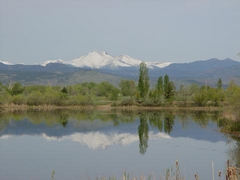
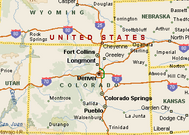 One citizen's view of Longmont, Colorado, USA.


 The large Ft. Collins beet factory buildings were demolished in 1967 but some of the smaller buildings were saved. The city wins the beet factory preservation award, so far, in keeping and renovating a few of their original sugar beet factory buildings. None of the other closed Great Western factory sites have done any such of a preservation effort although at least one (to be visited soon) still has the potential to do so. As described in an article by Sue Lenthe, Ft. Collins paid $1 million for 30 acres of the original factory site in the mid-90s, and another $6 million to renovate and expand the remaining buildings.


